The Seaside Heights Flood Rule Deadline Everyone Thinks Already Passed
investors August 27, 2026
investors August 27, 2026
A contractor prices out a renovation on a raised bungalow a few blocks off the Boulevard, and the number comes back higher than the owner expected. The reason isn't labor or lumber. It's four extra feet of elevation the contractor is pricing in because he assumes the new state flood rule already applies. The owner, who has been reading the same headlines everyone else has, assumes the same thing. Both are working from a deadline that, as of this month, hasn't actually closed.
That gap between what people assume and what New Jersey's Department of Environmental Protection is currently doing is worth understanding if you own, or are shopping for, an older home on this barrier island. It changes what a renovation costs, what a teardown pencils out to, and what question you need to ask before you write an offer on a fixer.
On January 20, 2026, the NJDEP adopted the Resilient Environments and Landscapes rule, known around building departments and law offices as REAL. The rule sets a new design standard for coastal construction called the Climate Adjusted Flood Elevation, or CAFE, which CSG Law describes as simply FEMA's base flood elevation plus four feet. New construction and any renovation that counts as a "substantial improvement" now has to put its first habitable floor at that height, not the one to two feet of extra freeboard builders were used to adding on top of FEMA's number.
The Ocean County Sentinel reports that the state had originally proposed five feet in 2024 before scaling back to four after pushback from residents, builders, and municipalities, a change the DEP made specifically to shrink how much additional coastal land would fall under the stricter standard. The rule also created something new called an Inundation Risk Zone, land that current models expect to sit permanently underwater by 2100.
None of this requires you to raise a home you're not touching. According to Highlands Borough's REAL guidance, the trigger is the fifty percent rule: if the cost of a renovation exceeds half the structure's market value, the project counts as a substantial improvement and REAL's elevation standard applies. Add a second floor, gut the interior, or rebuild after storm damage past that fifty percent line, and the four-foot standard is now part of the project.
Here's the part that's easy to miss. REAL included a legacy window: any application deemed administratively and technically complete by NJDEP within 180 days of adoption, by July 20, 2026, could still be reviewed under the older, lower elevation rules. That date has come and gone on the calendar. Most people I talk to assume it closed the door.
It didn't. On May 29, 2026, the DEP announced it would propose extending that legacy window by a full year, to July 20, 2027, to give the agency more time to gather input from residents, municipalities, and the real estate and insurance communities before deciding whether to amend the rule further. The formal proposal was published on June 1, a public hearing was held on July 7, and the comment period closed July 31. As of the DEP's own REAL rule page, the department has not yet taken final action on that extension. Until it does, it is continuing to apply the legacy provisions to eligible applications, meaning a technically complete filing submitted today can still, in practice, be reviewed under the pre-REAL standard.
In plain terms, the window most owners think shut in July is functionally still open while the state works through its own paperwork. That's not a loophole. It's the DEP saying so directly on its own site. But it also won't stay open indefinitely, and nobody outside the agency knows exactly when that changes.
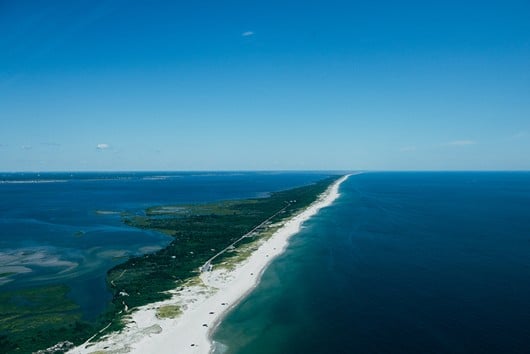
Seaside Heights sits on the Barnegat Peninsula, a narrow barrier island with the bay on one side and the ocean on the other, which is exactly the kind of geography REAL was written for. Ocean County carries more National Flood Insurance Program policies than any other county in New Jersey, a reflection of how much of its housing stock sits on barrier islands like this one. That concentration is also why the town has spent the past several years in an active rebuilding cycle. More than 20 aging motels have already come down as part of the borough's broader architectural turnover, and a meaningful share of the residential stock, especially the older bungalows on the numbered avenues, is either mid-renovation or a realistic teardown candidate right now.
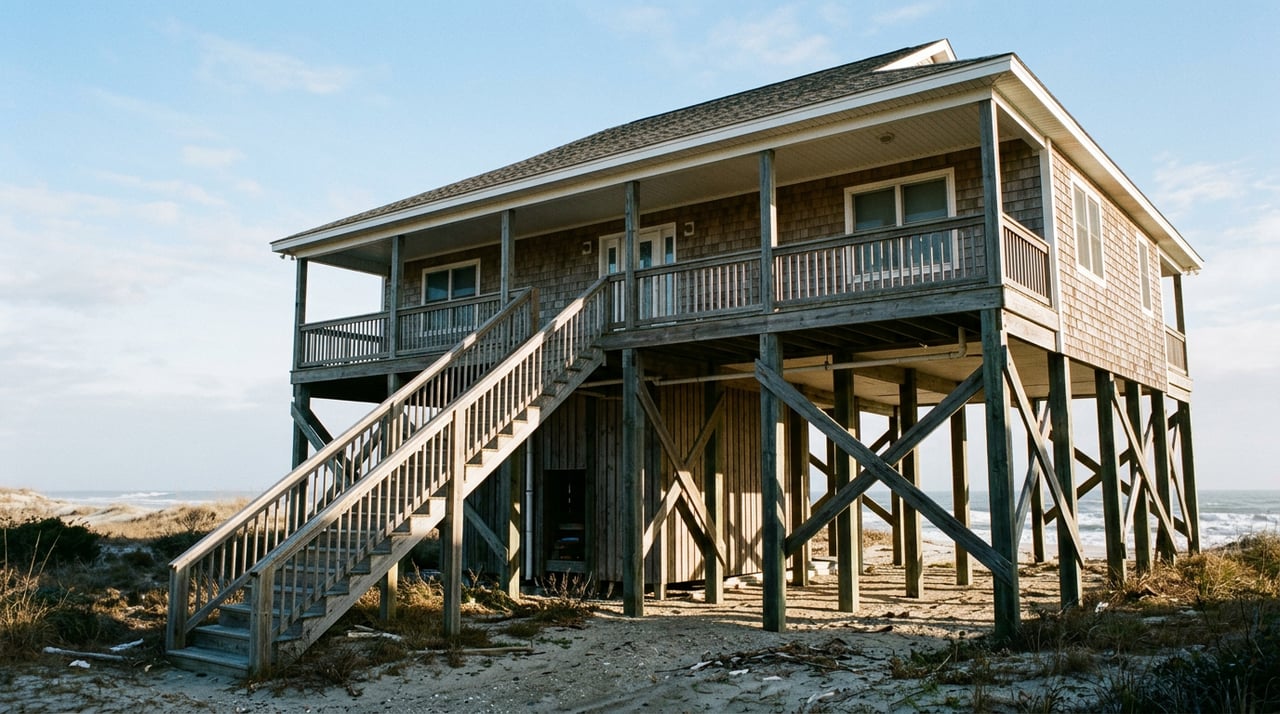
That timing is what makes the legacy window relevant instead of academic. A four-foot jump in required elevation isn't a rounding error on a barrier-island lot. To make the scale concrete, Get Insurance Quote Today reports that officials in Highlands, another Jersey Shore town working through the same math, have calculated that BFE plus four feet plus the borough's own added freeboard can put a first floor 10 to 11 feet above ground level on some streets. Seaside Heights already layers its own local design flood elevation on top of FEMA's baseline, the same kind of local freeboard requirement that stacks with REAL's new standard rather than replacing it. Add REAL's four feet to whatever your specific lot's base flood elevation already requires, and you can see how quickly a renovation's foundation and access costs move.
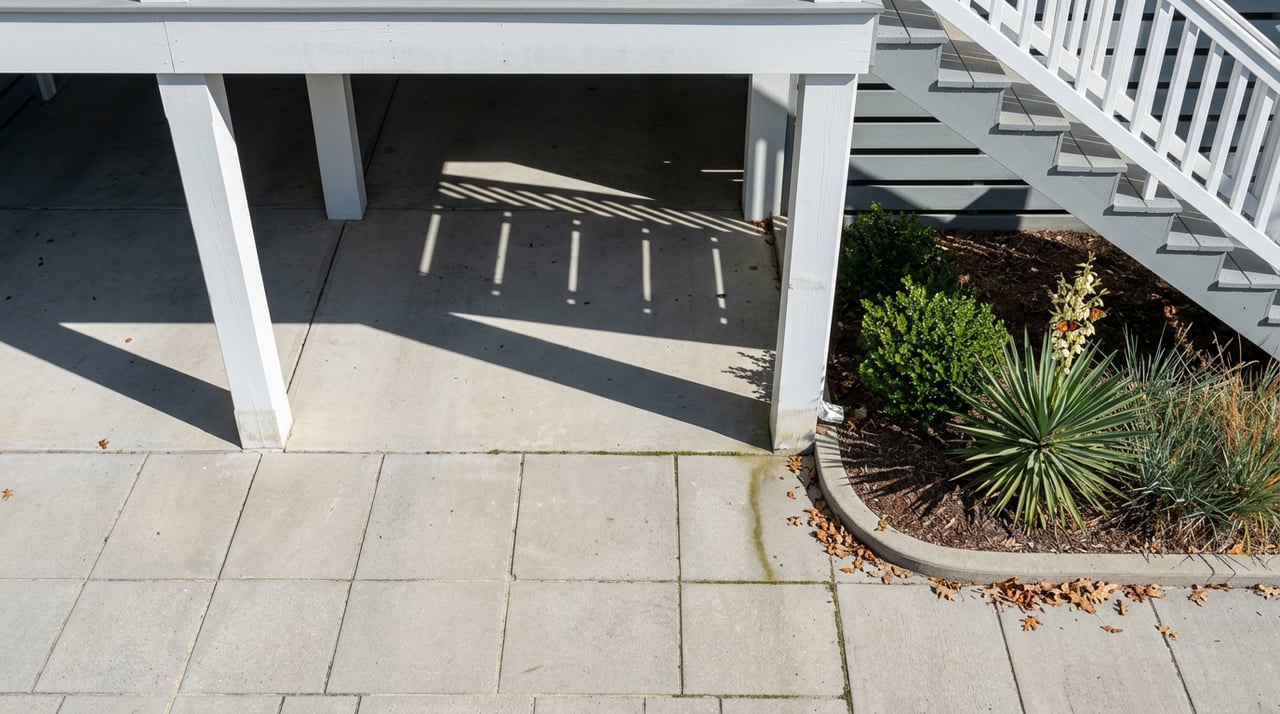
There's a structural wrinkle too. According to Riker, flood rules generally require a dry access route, meaning at least one path to the building that stays passable during the design flood. On a tight barrier-island lot, that often means the driveway or entry stair needs to be elevated along with the house itself, which adds cost that doesn't show up if you're only pricing the elevation of the structure.
If you're selling an older home here and considering a renovation before listing, the question isn't just "what does this cost." It's whether a technically complete application filed now could still lock in the pre-REAL standard while the state sorts out its own extension. New Jersey has also required sellers to disclose flood zone status and any past flood or water damage since March 2024, so that conversation is already part of your listing paperwork regardless of which elevation standard applies.
If you're shopping for a fixer-upper or a teardown lot, the listing sheet won't tell you whether the seller has already filed for legacy status, and it's a fair diligence question to ask directly. A property with a technically complete pre-REAL application already in the pipeline is a materially different renovation project than one that will be reviewed fresh after the extension is finalized, or after the window eventually closes for good.
If you own a rental or investment property and you're weighing a renovation against buying newer elevated construction instead, the REAL standard cuts both ways. Building to it costs more up front, but elevated homes qualify for meaningfully lower flood insurance, both through FEMA's Risk Rating 2.0 pricing and through private flood carriers that reward higher elevation. That's a longer conversation about your specific numbers, not a blanket answer either way.
None of this is legal or engineering advice, and a property's actual base flood elevation, zone designation, and eligibility for legacy review are questions for a licensed surveyor, your local floodplain administrator, and the DEP directly. What I can tell you from working this market is that the assumption everyone is walking around with, that the deadline already passed, is currently wrong, and that gap is worth checking before you price a renovation or write an offer.
Does this mean I have to raise my current home? No. REAL only applies when you build new or take on a renovation that meets the fifty percent substantial improvement threshold.
If the extension gets finalized, does that change anything for a project I already filed? The point of legacy status is that once an application is deemed technically complete under the current provisions, it's reviewed under the pre-REAL standard. Filing sooner rather than later reduces the risk of missing that window.
Does REAL directly change my flood insurance premium? Not directly. REAL is a construction and land-use standard, not an insurance rule. But a home built or substantially improved to the higher elevation typically qualifies for lower flood insurance pricing over time, since FEMA and private carriers both price risk based on how high your home actually sits.
Rules like this move in the background until the moment they show up in a contractor's estimate or a closing conversation. If you're weighing a renovation, a teardown, or a fixer-upper purchase on this island and want to talk through what it actually means for your specific address, that's exactly the kind of local detail I spend my time tracking. Karin Farley is here when you're ready. Let's Connect.
Stay up to date on the latest real estate trends.
jersey shore real estate


lifestyle

Finding or selling a home on the Jersey Shore should be a seamless experience. By pairing deep local expertise with a highly personalized approach, Karin protects your investment at every turn. From consultation to closing, you can expect transparent guidance, elegant marketing, and a dedicated partner.